Beginner guide: build a world that runs
Start smaller than you want to. A 60x60 region with one culture, two factions and six creature templates will teach you more in an hour than a continent will in a weekend.
The most common beginner outcome is a large, beautiful, silent world. Terrain everywhere, towns everywhere, and nothing happening. It is not a bug in the simulation. It is a design problem: too much space and too few relationships, so the systems have nothing to react to.
This guide builds the opposite. One region, two factions, one race, two monster types, six NPC templates and a settlement you can watch from a single screen. It takes an evening and it teaches more than a continent will.
Why small worlds simulate better
Every interesting event in Fantasy World Manager is a relationship between two things you placed: a faction needs something a zone has, a monster spawn overlaps a trade route, a hero's equipment beats a threat level or does not. Relationships scale with proximity. Spread forty factions across a continent and most of them never touch; pack two into one valley and they fight over the same zone within a simulated year.
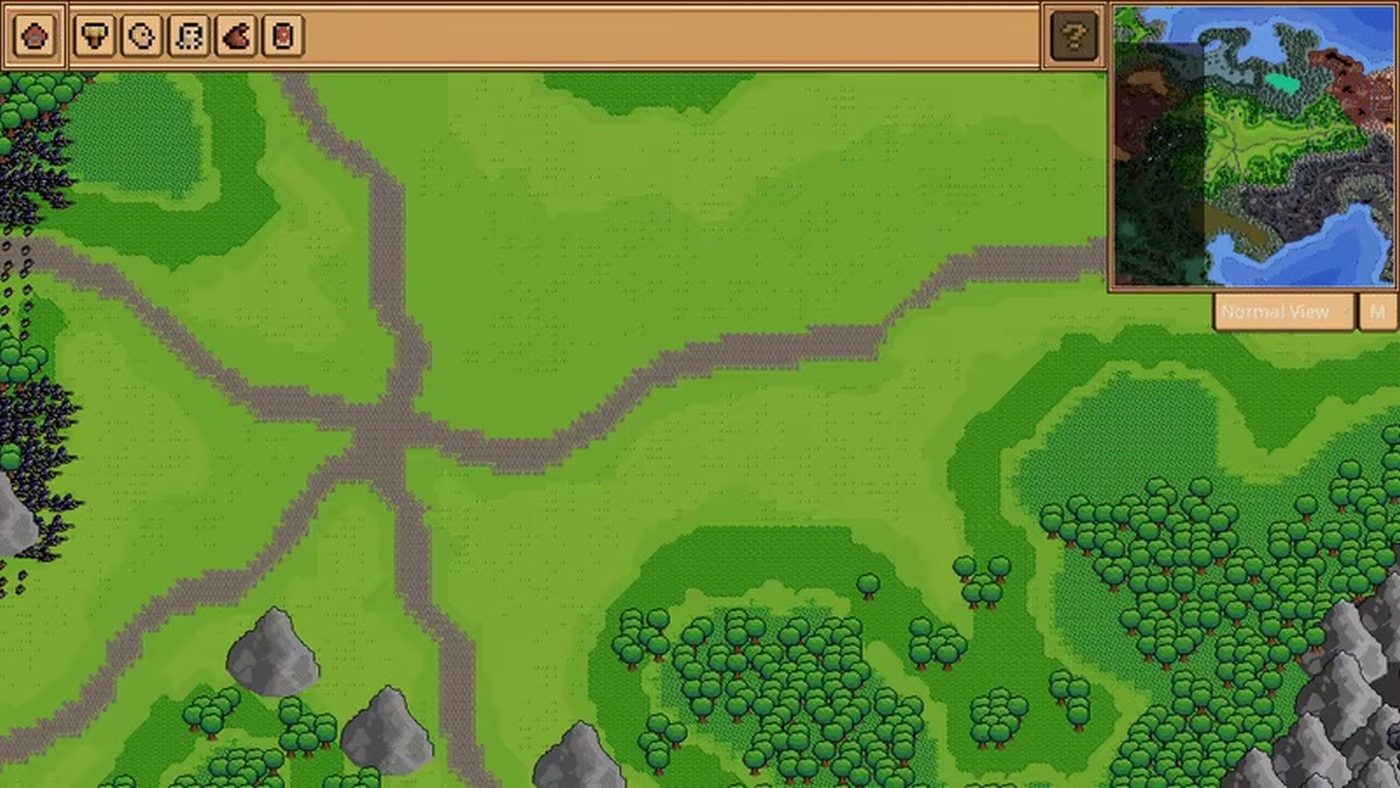
There is a second reason. The inspectors tell you what a specific zone, faction or creature is doing, but they do not tell you why two things interacted three days ago. Reading the cause requires that you can see the whole map at once and remember what you changed. Small worlds are debuggable; big ones are not.
The build order
| # | Step | Setting that matters |
|---|---|---|
| 1 | New world, small size | Keep the prefab toggle on for the first world |
| 2 | Paint one valley | Water, grass, one forest, one hill |
| 3 | One region over the valley | Any name; it groups the zones |
| 4 | Three zones | Valley floor, forest edge, hilltop |
| 5 | Two factions, one zone each | Give the third zone to whoever you want to lose |
| 6 | One race with clear modifiers | Do not balance; make it distinctive |
| 7 | Two NPC templates | A worker and a guard |
| 8 | Two monsters | One weak, one that needs the guard |
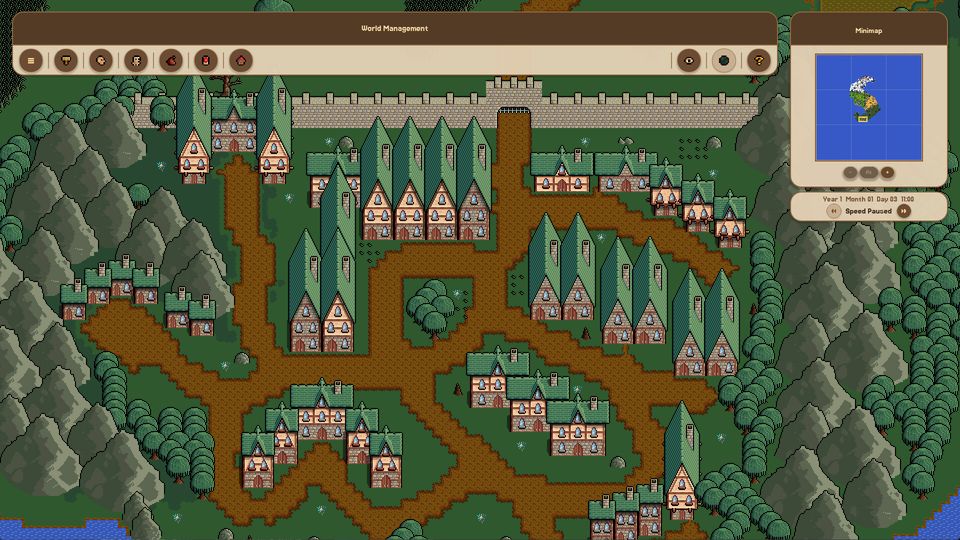
| 9 | One settlement | Eight to twelve buildings |
| 10 | Unpause at x2 | Watch for ten in-game days |
The third zone is the important one. If both factions start with one zone each and a neutral zone sits between them, you get a border to argue about. That single choice produces more behaviour than any amount of extra terrain.
Making a race that feels like something
Races modify eight primary attributes: Strength, Intelligence, Dexterity, Vitality, Luck, Speed, Focus and Perception. Beginners spread points evenly, which produces a species with no identity and no visible effect on the simulation.
Pick one axis and commit. A mountain people with high Vitality and low Speed will hold ground and lose races. A forest people with high Speed and Perception will trade badly in a straight fight and dominate anything that depends on reacting first. Neither is "better"; both produce different stories, and different stories are the point.
The derived block - health, mana, power score, initiative, haste, evasion - recalculates from the primaries, so you are not setting those directly. The attribute reference lists the full mapping.
What to watch in the first ten days
Do not watch the buildings. Watch three things:
- Movement. If nobody moves, your zones have no quests or your settlement is unreachable. Check pathing first, then faction needs.
- Spawn behaviour. Creatures should appear inside the zone whose spawn rules you set, not evenly across the map. If they appear everywhere, the zone rules did not take.
- Ownership colour. If a zone changes hands in the first ten days, you built a working border. If nothing changes in a hundred days, one faction is too strong or the zones are not adjacent.
The four beginner mistakes
Painting everything before testing anything. Place one village, unpause, confirm it works, then build the rest. Otherwise you cannot tell which addition broke it.
Skipping the faction step. NPCs without a faction are scenery. Factions are what generate goals, currency and diplomacy.
Over-building the settlement. Twelve buildings with clear roles beats forty with none. A giant town mostly produces pathfinding noise.
Running at maximum speed. At x5 a year takes 48 minutes and events blur together. Start at x2, where a day is ten minutes and you can actually watch a decision happen.
Next steps
When the valley works, widen it: a second region, a third faction, a monster zone whose threat level rises until the factions have to deal with it. The region and zone guide covers the rules that make that escalation possible, and the simulation guide explains which system is responsible for what.